

Dental Disease in Dogs and Cats
Dental disease is the most common health problem we see in dogs and cats, and bad breath is often the first clue. Here is how to spot it, what the stages mean, and when your pet needs to be seen.
Book a free dental assessment →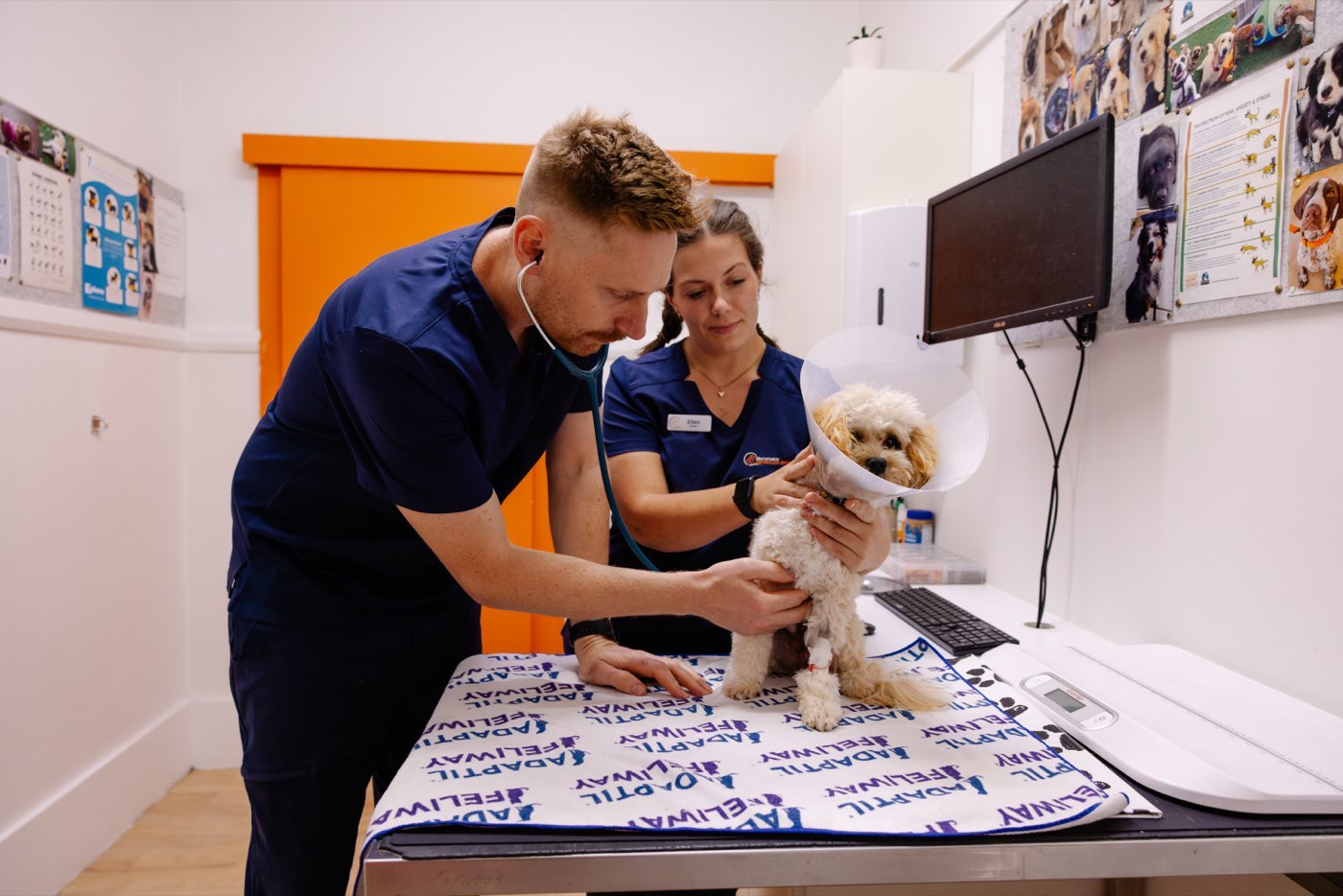
The short answer
- Dental disease is the most common health problem in dogs and cats, and most pets have some by age two.
- It starts as reversible gum inflammation and can progress to permanent damage around the tooth.
- Bad breath is often the first clue. Most pets keep eating until it is advanced.
- A proper clean is done under anaesthesia, so the earlier it is caught, the simpler and kinder the treatment.
What is dental disease in dogs and cats?
Dental disease, or periodontal disease, is inflammation and infection of the gums and the structures that hold each tooth in place. It is the most common health problem we see. By age two, about 80% of dogs and 70% of cats already show some degree of it, which is why a dental check matters even before anything looks wrong.
It develops in two phases. The first is gingivitis, inflammation of the gum caused by plaque, a soft film of bacteria that builds up along the gumline. Caught at this stage it is reversible. Left alone, it can progress to periodontitis, where the infection reaches the bone and ligament that anchor the tooth. That deeper damage is permanent, although further loss can be slowed once the disease is treated.
Cats can face an extra problem on top of this. Tooth resorption, where the body slowly breaks the tooth down from the inside, is common in mature cats. It can be painful and is easy to miss at home, so cats need dental checks just as much as dogs.
Book a free dental assessment →
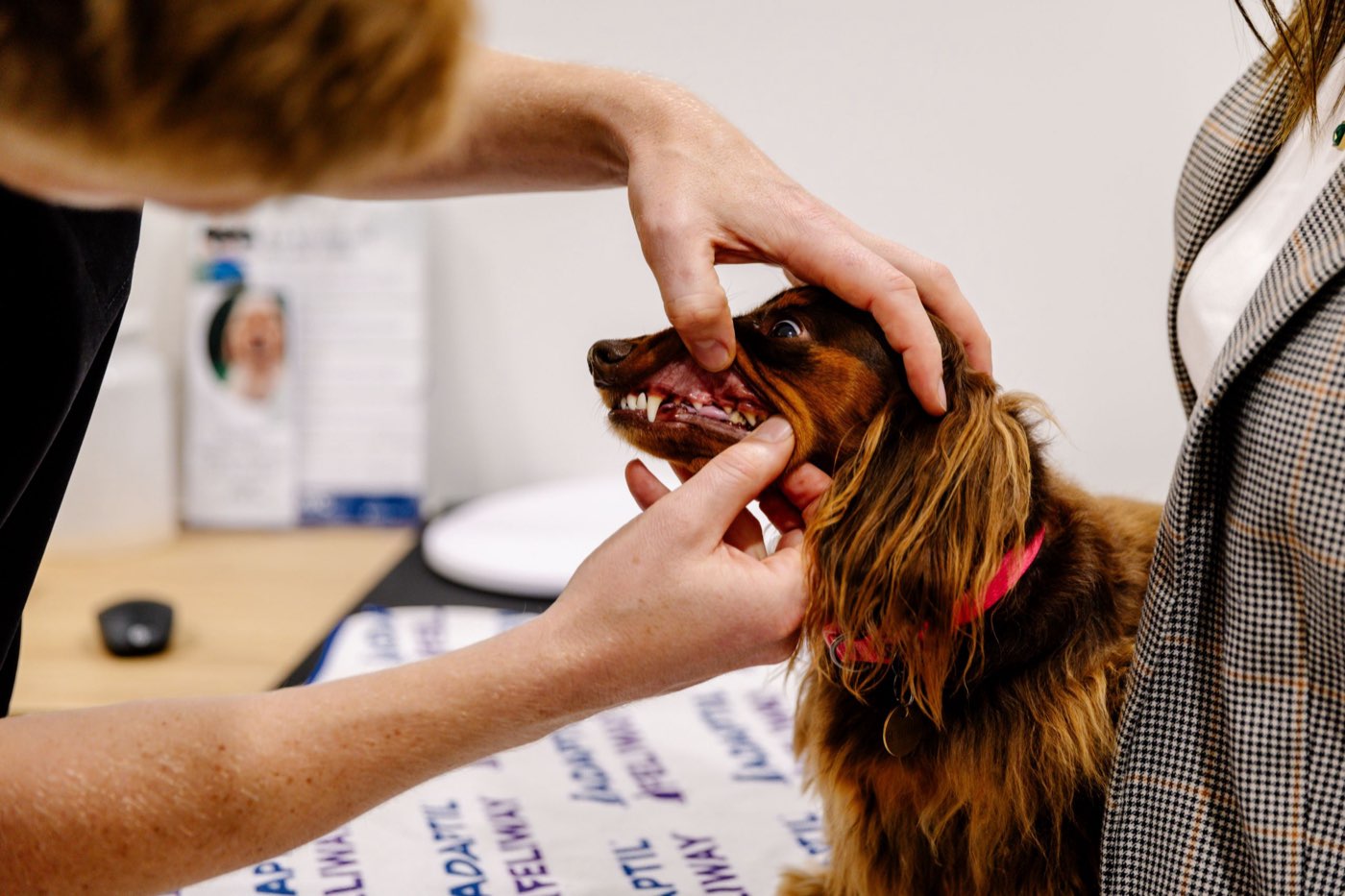
What are the signs of dental disease at home?
Dental disease is easy to miss, because pets rarely stop eating until it is well advanced. The signs worth watching for at home include:
- Bad breath, often the very first thing owners notice
- Red, swollen or bleeding gums, especially along the gumline
- Yellow-brown tartar (hardened plaque) building up on the teeth
- Drooling, or blood-tinged saliva
- Slowing down when eating, reluctance to chew, or refusing to eat
- Pawing at the mouth, or rubbing the face along the floor
If your pet's teeth look clean and the bad breath is still there, it can point to other health problems, so it is worth a visit to us either way.
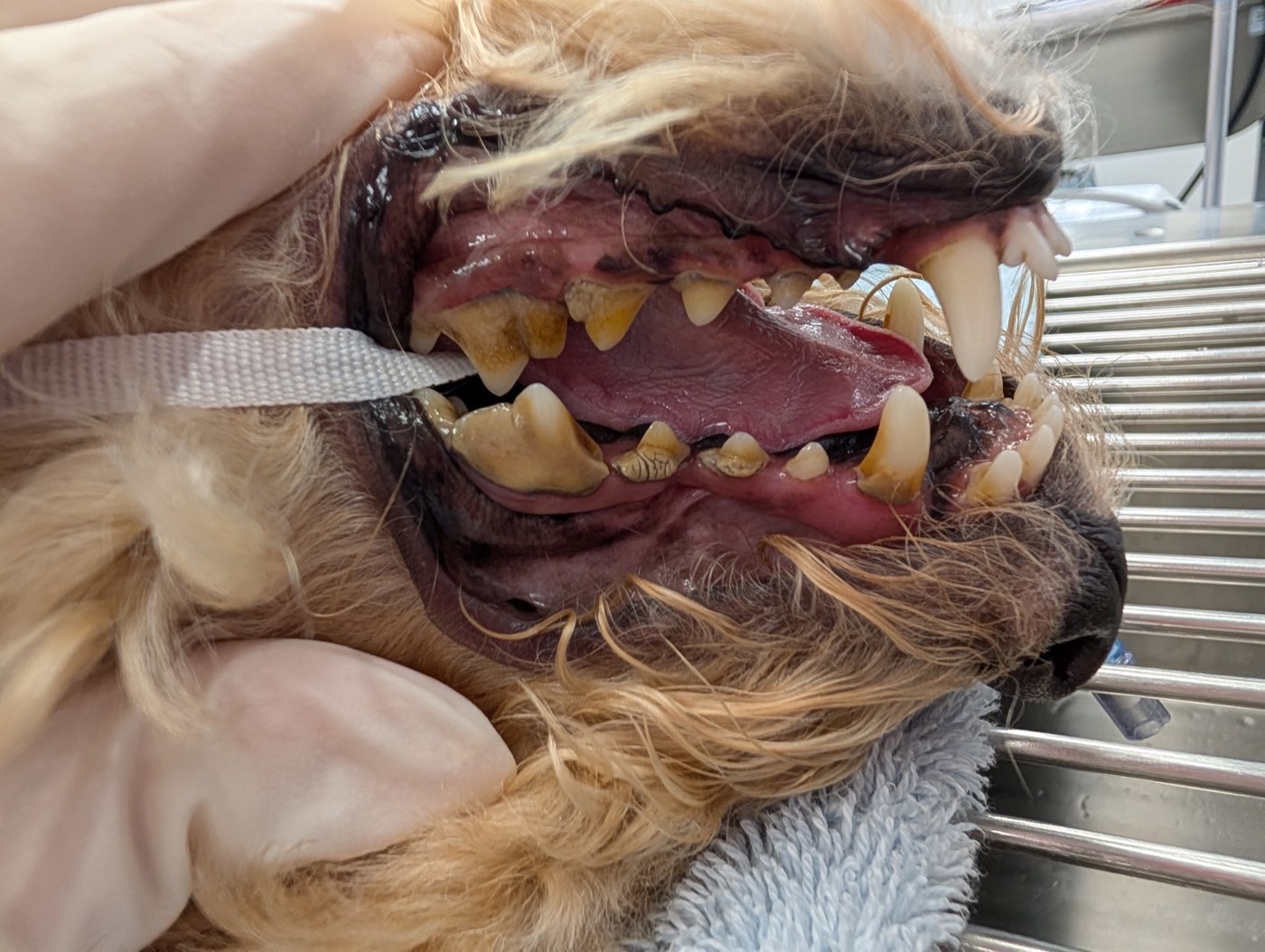
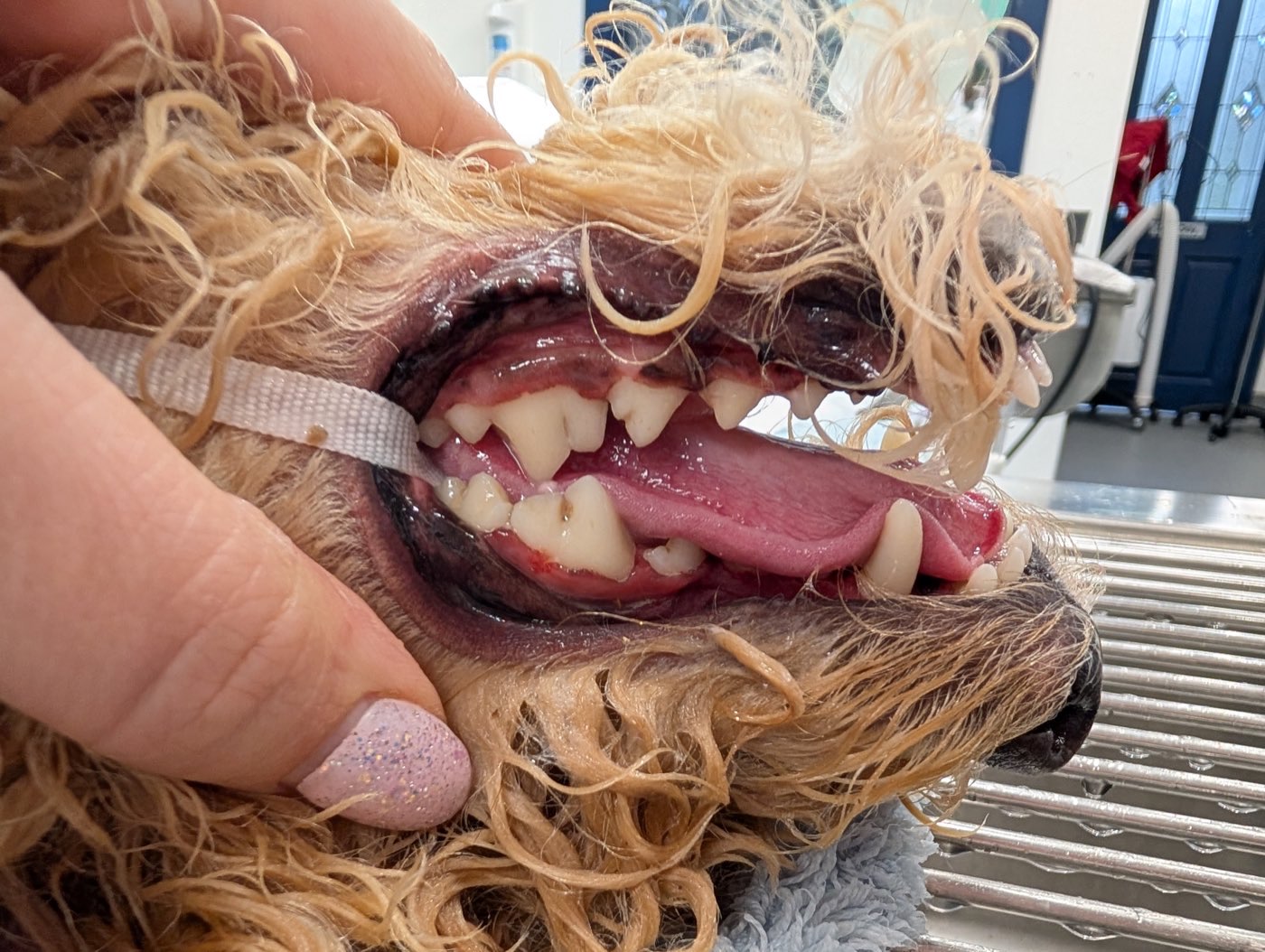
Start with a free dental assessment
A free dental assessment at Macquarie Veterinary Hospital is available all year round, so you can find out where your pet stands before deciding anything.
Signs worth a prompt appointment
- A visibly broken or fractured tooth, especially with a dark or exposed centre
- Swelling of the face or under an eye, which can signal a tooth-root abscess
- Your pet stops eating, or cries out when eating, chewing or yawning
- Persistent bleeding from the mouth, or a strong odour with obvious pain
- A loose or badly discoloured tooth
Most dental disease is picked up at a routine check. If you see any of the signs above, call us on 02 9888 1833 and we will get your pet in.
Can dental disease affect the rest of my pet's body?
Dental disease does not always stay in the mouth. Ongoing gum infection has been linked with changes in the kidneys, liver and heart, and dogs with advanced dental disease have been found to have a higher rate of endocarditis, an infection of the heart valves.
We treat teeth early for that reason. Clearing the infection out of the mouth takes the pressure off the rest of your pet's body.
How do vets treat dental disease?
Treatment depends on how far the disease has progressed. We grade dental disease in stages, from PD1 to PD4:
| Stage | What it means |
|---|---|
| Normal (PD0) | Healthy gums, no periodontal disease |
| PD1 | Gingivitis, gum inflammation only, still reversible |
| PD2 | Early disease, less than 25% of the tooth's attachment lost |
| PD3 | Established disease, 25 to 50% attachment lost |
| PD4 | Advanced disease, more than 50% attachment lost |
A proper assessment and clean is done under general anaesthesia with a breathing tube. Dental procedures without anaesthesia cause stress for your pet, and without adequate pain relief they can be very painful. Anaesthesia is also the only way to clean and examine below the gumline and to treat problems properly. It is carefully monitored from start to finish, and for many pets a scale and polish is all that is needed.
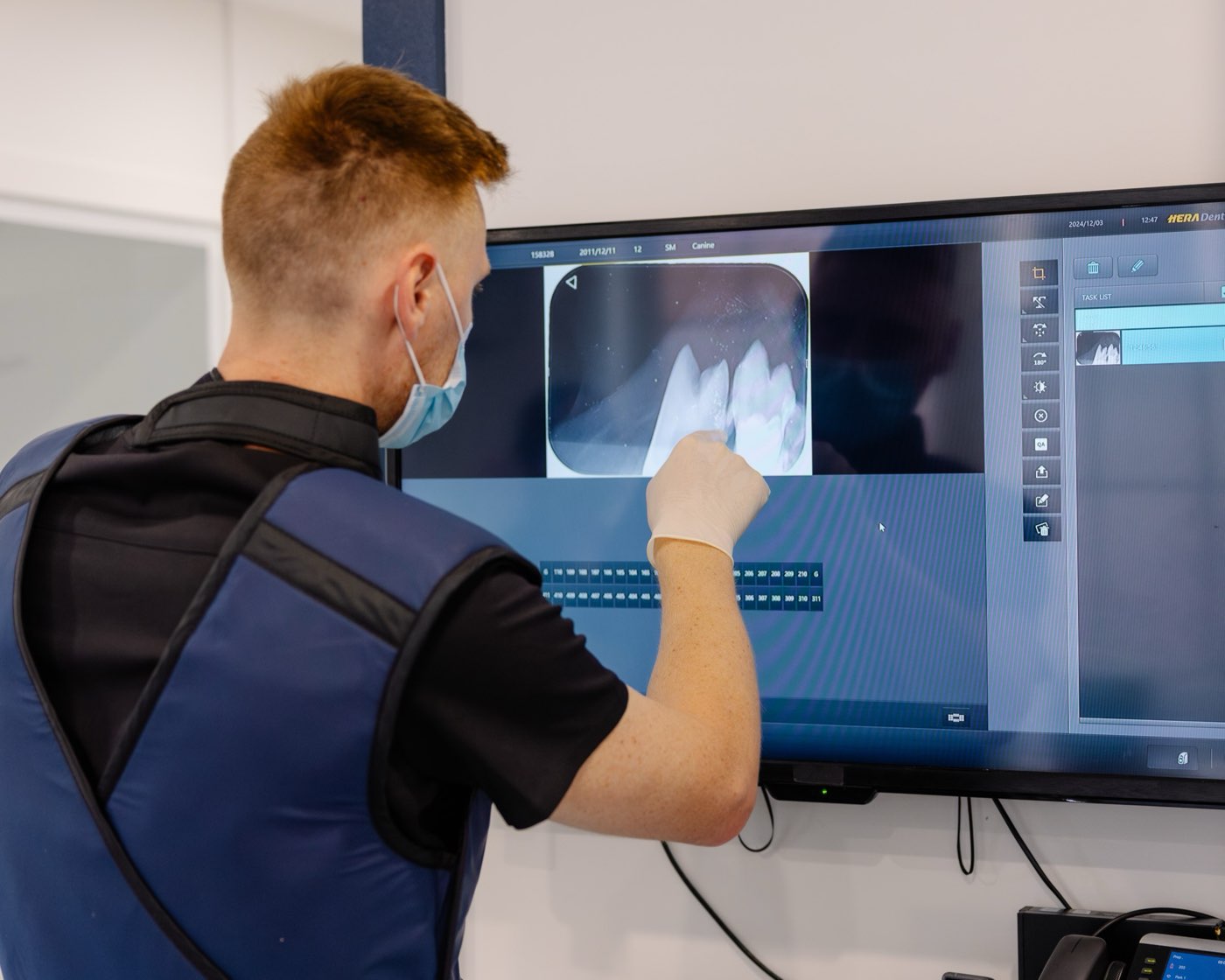
We regularly perform X-rays during a dental procedure when they are warranted, to assess what is happening below the gumline where you cannot see it. In more advanced cases, a tooth may need to come out to take away the source of pain and infection.
Every plan is worked out for the pet in front of us. We look, we tell you what we find, and we talk you through the options before anything is booked. Macquarie Veterinary Hospital has the imaging, anaesthetic monitoring and surgical facilities on site, so a routine clean and a more involved extraction can both be done in a single visit.
Not sure how bad your pet's teeth are?
A free dental assessment tells you what stage things are at and what your pet actually needs, from a simple clean through to treating a painful tooth.
Is anaesthesia-free teeth cleaning safe?
Anaesthesia-free teeth cleaning scrapes the visible outside of the teeth while the pet is held still. It can make teeth look cleaner, but it does not remove plaque and bacteria from below the gumline, which is exactly where dental disease does its damage. It can also leave disease hidden under a clean-looking surface. A real dental assessment and clean needs anaesthesia.
We are Fear Free Certified, and that approach does not sit with procedures that cause stress and pain being done without proper anaesthesia and pain relief. It is not something we offer, because it is not kind to the pet.
Book a free dental assessment →
What can I do at home to protect my pet's teeth?
The single most effective home care is daily tooth brushing with a pet-safe toothpaste. Brushing removes soft plaque. It cannot remove tartar once that has hardened on the tooth, and it only helps if it is done every day.
In addition to regular brushing, dental diets, chews and water additives can help. Look for the VOHC seal on the pack, an independent mark given to products shown to reduce plaque or tartar. Good home care slows dental disease down. It does not replace a dental check.
Why act now
The kindest dental is the one your pet does not need yet. A check now catches gum disease while it is still reversible, which is the stage where the treatment is simplest for your pet.
Book a free dental assessment →Full dental care, in the one visit
With on-site X-rays, anaesthetic monitoring and a surgical team, Macquarie Veterinary Hospital can assess, clean and treat your pet's teeth in the one visit. We are Fear Free Certified and open 7 days.
Common questions
How do I know if my dog or cat has dental disease?
The most common early clue is bad breath, along with red or bleeding gums and yellow-brown tartar on the teeth. Because pets usually keep eating until it is advanced, many cases are only picked up at a routine check. In addition to your pet's annual health check, you can book a free dental assessment with our team any time for peace of mind.
Does my pet really need anaesthesia for a dental clean?
Yes, for a proper one. Dental procedures without anaesthesia cause stress to your pet, and without adequate pain relief they can be very painful. Anaesthesia is also the only way to clean and examine below the gumline, take dental x-rays and treat painful teeth. Anaesthesia-free cleaning only tidies the visible surface and can leave disease hidden underneath, so it is not a substitute.
Is bad breath in dogs normal?
No. “Doggy breath” is not something to accept. Persistent bad breath is one of the earliest signs of dental disease and usually means plaque and bacteria are building up along the gumline. It is worth a dental check. If your pet's teeth look clean and the bad breath is still there, it can point to other health problems that warrant a vet visit.
Can I just brush my pet's teeth instead of a professional clean?
Brushing is the best thing you can do at home and, done daily, it really helps. It only removes soft plaque though, not the hardened tartar that has already formed. Once tartar and below-the-gumline disease are present, they need a professional clean under anaesthesia to remove. If you're not sure whether your pet needs a professional clean, book in with our team for a free dental assessment.
How often should my pet have a dental check?
As a general guide, at least once a year, and more often for breeds prone to dental problems or pets who have needed treatment before. Your vet can tell you the right interval for your individual pet at their routine visit.
…Had a dental consultation with Dr Tessa today and she was amazing! She was so patient and transparent and made sure we understood everything.…megan lam, Google review · 5 stars
A real review, quoted as written. Read our Google reviews →
This guide was written by the Macquarie Veterinary Hospital team and medically reviewed by Dr Michael Stephen, BVSc, MVSc. It is general information about dental disease in dogs and cats, not a substitute for examining your individual pet.
References
- WSAVA Global Dental Guidelines (2020) - prevalence, disease stages and systemic links.
- AAHA Dental Care Guidelines for Dogs and Cats (2019) - periodontal staging (PD1 to PD4) and home care.
- American Veterinary Dental College - anaesthesia-free dental cleanings.
- Veterinary Oral Health Council (VOHC) accepted products.
Medically reviewed by Dr Michael Stephen, BVSc, MVSc · drafted July 2026. This guide is general information, not a substitute for examining your individual pet.
Worried about your pet's teeth or breath?
Book a free dental assessment at Macquarie Veterinary Hospital. We will look over your pet's mouth, tell you what stage things are at, and give you a clear plan made for your pet.
Book a free dental assessment →